Thursday, January 26, 2012

water awareness part one


Our Water Awareness Journey

I'll get back to the pellets and biomass soon. Right now while it's fresh in my mind I want to share observations of a cross country trip where we observed what happens when there is too much and too little water and people have made unwise choices regarding same.

The lake watcher headed west with her co captain and a crew mate from Wolcott a few days ago. Our first destination was the deep south where we became acutely aware of the impacts of too much water. We traveled from Mobile Bay west to the fabled French Quarter of New Orleans which largely escaped the rage of Katrina. Biloxi however did not. I had noticed the occasional groupings of live oaks around weedy plots as we drove the coast highway. When we neared the old gulf city of Biloxi these groupings became more frequent. Broken bleached snags and stumps marked the seaward median strip where once a complimentary row of oaks reached out over the highway to lace branches with the land side trees. We saw large multistory casinos with ripped and tattered siding exposing the steel beams beneath. A bill board touted Slab Removal 1.50 per square foot. We saw concrete street lamp bases still sprouting wires, bent and uprooted fire hydrants, and many many slabs with ragged live oaks and for sale signs usually listing a banking contact. It will be many years before Mississippi recovers from Katrina and its 25 foot storm surge.

Do you think that just maybe the banks might decide not to finance new mansions with waterfront views there?


The vital bustling colorful flavorful raucous French Quarter was largely untouched by Katrina. Humans are a resilient species and they're still busy trading and dealing and selling to the tourists in the Big Easy. We took a mule wagon ride ( mules stand the heat better then horses) with Daryl the guide and Willie providing pull. Before boarding I observed two notices taped to the seat backs. One had a three inch header PETA LIES the second with smaller print outlined the mule welfare guidelines of Willie's employer. He heads back to the barn when it hits 95 degrees. Daryl was a 22 year veteran of the tourism guide biz. He had been with his street wise mule for about 13 years.


Do you know where The Music was born? Not in the French Quarter. It was born in the Treme ( pronounced Trem-may). Daryl told us with pride in his voice. This, I now know, was one of the city's oldest neighborhoods where the free people of color lived. He also told us a well regarded producer had created an HBO series about the area and he had a bit part in one episode as a dancer. Later we had a beer and listened to three young black male musicians and a young white female vocalist wail out the blues. The waiter smiled and thanked me when I put a tip in the muscians' jar. The 99 % are still scrapping and scraping by in New Orleans. They even spare the tourist a smile and a cheery hello now and then.


Katrina largely spared the Lafitte swamp, too, but here we saw the first signs of drought. Crispy brown withered vegetation and dry bare earth lay beneath the tall straight Cypress trees and their knees. One tiny puddle of water under the boardwalk contained a dozen minnows. No alligators to our regret. But the treetops were busy with birds-winter warblers, sparrows, titmice and chickadees with an accent and slightly different plumage than New York black caps.


We stopped at the visitors center to inspect the restrooms and here a volunteer told us the swamp was under the influence of the great southwestern drought. But not to worry. The gaiters find holes, the turtles and fish repopulate, the birds go somewhere. But what the swamp can't deal with is giant Salvinia. This and a trio of other invasive south American plants how rapidly spreading through the bayous are weaving a choking mat of vegetation so thick you can walk on it in some places. You can't hand pull it- it takes a dredge and in five weeks it repopulates. A bit disheartened by this we moved on.


Next hydro fracking and a historic drought in the Permian Basin of west Texas.


Wednesday, January 11, 2012

pellets fish and clean water


Pellet stoves happy fish and clean beaches. First in a series


What has a wood burning stove got to do with a less smelly beach? Bear with me. This will take a couple of paragraphs.


Erosion is not good for lakes. When dirt washes off bare land, it often carries antibiotics, persistent pollutant chemicals and endocrine disrupters and pathogenic bacteria with it. If the mud has come from a cornfield or some other land with row crops on it, the runoff frequently carries fertilizers that end up fertilizing algae and rooted weed growth in the lake. Too much nitrate and phosphate pollution from agriculture has caused toxic blue green algae blooms, near shore “dead zones” with no oxygen, and botulism outbreaks that killed thousands of birds on Lake Erie and Ontario. So how are pellet stoves mixed up with this?


Pellet stoves are an increasingly popular way to heat houses in the rural areas of the Great Lakes region. Most use sawdust that has been formed into little cylindrical pellets that look like rabbit chow. In areas with lots of trees, waste sawdust pellets bagged up as fuel are very competitive with propane and heating oil if you have a special stove to burn them in. Northern Europe has modernized pellet stove designs because the fuel burns much cleaner than cordwood. In fact, late last December a bulker loaded with 28,000 tons of pellets left a terminal near Norfolk Virginia for Germany where homes and businesses burn about 1.6 million tons a year. Europe in general is increasing its consumption of pellet fuel and one industry trade group predicts that use could double in eight years from the current 11 million tons to 15 to 25 million tons.


But as clean burning easy to use pellet stoves become popular, the available sawdust supply dwindles. It takes seventy years to grow a decent sized tree. It takes seventy days to grow a field of perennial grasses or golden rod. And native grasses can make fuel pellets too. A hundred years ago people burned hay and straw and dried cow chips out on the tree less prairies. Straw stoves have been around for years in Scandinavia and in rural areas of the U.S. In fact back in the 1870s straw burning steamers were being used on threshing rigs. And people have burned wheat and rye grain in stoves. Back in 1988 when I saw my first pellet stove in Watertown it was burning spoiled corn kernels. So the interest in grass pellets now on the upswing simply continues the long standing practice of getting heat energy from farm crops and waste fiber.


Stay with me for one more paragraph.


Many grasses are perennial plants. They develop huge strong root systems that penetrate deep into the ground. A good hay seeding of perenial grasses that's fertilized regularly can last for at least a decade as the farmer takes off two or three cuttings a year. All that time, the grass holds the soil on the field even as it provides forage for cows, or cover for nesting birds and wildlife. Given ample fertilizer you can produce five tons of biomass per acre in the Lake Ontario watershed. That biomass, like wood, can be turned into pellet fuel and used in heating. At the time I wrote this the retail prices of wood pellets were running 260 to 300 dollars a ton. And it can reduce soil erosion and inputs of fertilizers and chemicals into Lake Ontario too One way it does so is if farmers plant wide buffer strips of grass near streams and creeks to soak up the excess manure they apply to their fields. This keeps the fertilizer out of the water. Planting perennial grasses on steep slopes also keeps that priceless resource we call 'dirt' in place. As Jared Diamond author of the ground breaking book Collapse: How Societies Choose to Fail or Succeed points out, history shows repeatedly that when a society loses its topsoil, it can not long endure.


In a press release from a German company announcing construction of a pellet plant in east Texas that will produce 500,000 tons of fuel a year German Pellets says;


Wood pellets are the fuel of the future. They are produced from the renewable raw material wood, meaning that a sustainable supply is guaranteed. In addition, wood pellets are significantly less expensive than fossil fuels. Pellets are a clean, CO2-neutral fuel, which means they do not contribute to climate change or pollute the environment. “


Possibly. But some folks right here in Ontario and Quebec and upstate NY and Vermont are thinking grass pellets may be the fuel of the future. Our next article will take a look at REAP and Cornell and some other endeavors to create sustainable affordable bio fuel from land that should not be growing corn.

coming next- can cattails contribute to 'energy independence' from the Middle East?


Monday, December 19, 2011

December cattails


A December Canoe trip thoughts on the amazing cattail and other ecology


Anne Dillard writes that she takes walks to keep an eye on things. So, to check up on the lake on a unexpectedly mild still day of subdued soft sunshine in mid December I went for a short canoe trip along the shore. I pulled out on a patch of gravel and went ashore to inspect a small wetland that we call The Swale. It's mostly full of woody shrubby button bush but here and there a few cattail spikes had managed to establish. Possibly they took root last year when the water levels were low enough to expose more mud than usual in the Swale. A very faint barely detectable south wind was filtering up the length of the brown and gold swamp. The low winter noonday sun back lit the cattail spikes as they spread their seed. The silent flight of countless tiny sparks of life brought all kinds of thoughts profound and otherwise to mind. The fuzzy seed heads shone brightly, like incandescent torches against the dark background as they released streams and clots and clumps of seed. The bits of fluff looked like sparks off a July Fourth sparkler.


How many? A multitude. A vast swarm. A blizzard. An uncountable quantity. A number too great to even consider. Life flowed past me constantly. Some would go on to found dynasties and cattail empires of their own in a ditch or pond somewhere. Most would soon land on the lake's cold placid surface to expire. Strange to think how full of life the air usually is. Pollen grains, tiny seeds. Spider silk, midges, spores and cysts, they're all up there, like the plankton in the Gulf of Maine I once studied. We just don't see all that aerial plankton being sent aloft during the growing season by all sorts of reproductive plant and animal apparatus hard at work distributing new life.


On this mild still winter day the thought of all that life around me unseen was oddly comforting.


When I got back ashore I asked Google how many seeds are in a cattail head. About 300,000. And How many stalks per acre? About 86,000. So a one acre marsh can crank about 25 billion plus potential cattails. I think I'll stop right there with the cattails.


for the rest of the ecology check the log on line at silverwaters.com


Monday, October 31, 2011

all souls day beach


Halloween , as fall shades into late fall is a time when dim ancestral memories of a more “spirited” time come to mind. These days the season seems to be mostly devoted to candy, plastic pumpkins, inflatable yard decorations, and other consumer based sorts of activities. This is only appropriate and very much in keeping with modern times when foraging and farming have been replaced by shopping as the major human activity in North America. But now and then spirits still stir the awareness as one walks an empty fall beach.


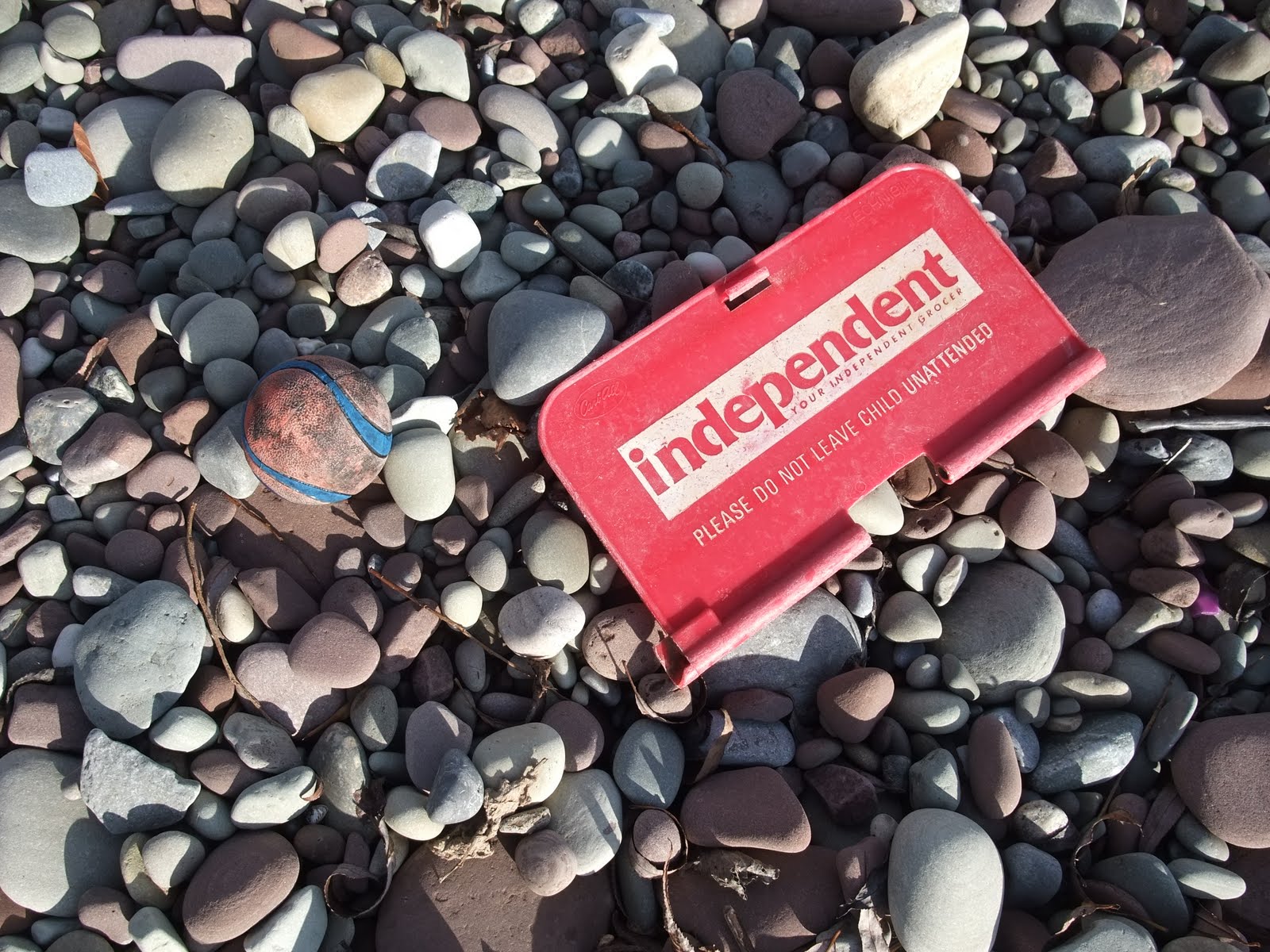
What message were the spirits sending us yesterday as we strolled by a calm lake in the crisp morning air?

I moved the printed message a few feet closer to the lost rubber ball to make the photo a bit more dramatic.(click on the photo to enlarge and read) . Seemed like a good thought as the ghouls and ghosts walk the streets and the divide between life and death thins on the eve of all souls day. This was traditionally a time when the opportunity for contact and communion between the living and the dead was strongest. It's also the time of Mexican folk festivals associated with the Day of the Dead, honoring lost infants and children. And as light levels dim, leaves fall, days shorten and nights grow cold, it does feel like the cold death of winter draws near. The year we knew as 2011 grows old. Soon it will die and the child of 2012 will appear. These darkening days we need to look for and attend to the future. It is coming.

Wednesday, March 23, 2011

A Woman's Quest

One Woman's Quest for a better toilet

In honor of World Water Day on March 22 I am publishing a tribute to a young entrepreneur in England who is working towards cleaner water.


Americans “ love to flush and forget” says Virginia Gardner, recent graduate, industrial designer and founder of the small startup company Loowatt. But the practice of crapping in our drinking water and then using chlorine to kill the pathogens (potentially creating toxic trihalomethanes in the process) is deluded if not downright stupid. Humans, however, are nothing, if not ingenious. In October 2010 the WTO ( World Toilet Organization) founded in 2006 by another visionary named Jack Sim whose motto is 'live a useful life', held its annual summit in Philadelphia bringing together activists, engineers, and health experts at a showcase and information exchange for contractors and the general public on sustainable sanitation.


Waterless toilets that compost waste can operate effectively to produce pathogen free compost without power or water. They have been popular for years with owners of seasonal homes and cabins as they are simple to install and need no costly water hungry septic system. However, the developed world with its existing infrastructure of sewage plants and waterlines has lagged in adopting the technology more widely, while cost has limited their use in third world countries. But time and water are running out. Yemen, some believe, could be the first nation in modern history to run completely out of water. Using less and not putting human sewage in it, is vital to the health and productivity of billions of humans and to earth's water, too.


There are a number of intriguing new designs for waterless toilets coming on the market. Virginia Gardener presented a paper at the WTO on her toilet that generates power. She first worked on the project as a graduate student at The Royal College of Art in London.


After a couple of false starts (the red wriggler worm model was a little too “earthy” and was quickly scrapped) she worked out a system with an inexpensively produced waterless toilet to collect poo in an air tight package that is then transferred to a separate biodigester. This in turn creates and collects methane for use as a cooking fuel along with liquid fertilizer and solids that can be composted. The digester is a basic low tech affair wrapped in insulation made of hemp and flax fibers to preserve heat during the process. ( the methane producing bacteria require a warm environment for efficient gas production.)


A test toilet was set up at the Willowtree Marina near London's Heathrow Airport in the fall of 2010 and Virgina and her co workers at LooWatt continue to refine the concept and it's market. For more on her endeavor and that of the WTO (helping save our water one flush at a time). And don't miss The Big Squat on Nov 19 2011!


visit http://www.loowatt.com/ ( where a short and enlightening video describes the concept of human generation)


and Jack Sim's effort http://www.worldtoilet.org/index.asp


Sunday, March 6, 2011

Beach College


I'm offering an introduction to Beach College on May 5 6:30 pm at the Brown Road branch campus Wolcott. As I wrote last month on the LOLOL (Lake Ontario Log On Line at www.silverwaters.com) strong connections between nature and families are vital to everyone's well being and beach college is a fun way to enjoy and strengthen some of those connections.


I've headed to the edge ever since I could toddle. My first salt water experience was a visit to a sandy beach somewhere near Boston where family relatives resided. I slogged through what seemed like miles of deep sand so different from my native narrow pebble beaches. I saw and chased gulls the size of eagles (when I was five years old.) And I waded into icy seawater up to my ankles and quickly retreated. Then I told my mother I liked my little beach back home with its summer warm lake much better. A year or two later a trip to a finger lakes cottage introduced me to fossil hunting on a narrow bit of rocky shore. I still recall the thrill of discovery, the greedy gathering, the delight I took in my horde of fossil brachiopid shells and small horn corals which I thought were fossil teeth from a giant carnivore. Several jars of them kicked around my house for years.


In college and beyond when I started cruising with various sailboats, I advanced my littoral studies after landing on many more beaches. I explored sandy beaches on the Chesapeake where I once stranded my Lighting on a falling tide. I peered into tide pools on Maine's coast and pried mussels off the rocks of Cape Ann to steam for an impromptu clam bake in a biology lab. One August night during a red tide I discovered a low tide mudflat that illuminated with a flash of cold fire under each footstep. And as millions of tourists have done through the ages, I walked the glorious white sands of tropical beaches.


Beside the water, alone or with family and friends, endless varied treasures and memories await the beach college student. Perhaps you'll find a message in a bottle or some useful item of salvage. Perhaps a fossil worm borrow, sea lily stem fragment, bryozoans, cephalopods, or a brachipod shell fragment will turn up.


Science tells us the more awareness an organism has of its environment, the better its chances of survival are. Our environment consists of more than computer games, shopping malls, highways, and fast food restaurants. It includes air, water, and beaches. For your own good and that of the planet, take a course at Beach College this summer.


Monday, February 7, 2011

Saving Water


HOW How To Help Our Water by Conserving It

This is the fourth in our HOW Helping Our Water series, published in several local media that expands upon items from Sid's list (first published in my book Twinkle Toes and the Riddle of the Lake).This one is posted with a nod to arid southern California where the author is now visiting. Item number 7 from Sid's list is Save Water and the photo shows what southern California looks like without input from the Colorado River.


So why should we who live near a freshwater sea worry about saving water? Unlike San Diego with annual rain falls of 8 inches a year, don't we have lots? Yes, but when we use it, it gets DIRTY. Since the dawn of time dilution has been the solution to pollution. But Earth now supports 7 billion people, and that “solution” just isn't working too good anymore.


Somehow, I have long found the logic of drinking water and then crapping in the same water supply a bit offensive, if not downright deluded. Increasingly, others agree. This was made clear at the 2010 Annual World Toilet Summit, the biggest yet, held in Philadelphia last fall.


As several participants at this year's trade fair and technology showcase for plumbers noted, the U.S. with its regionally abundant water supplies lags far behind China, Europe and even the so called Third World when it comes to adopting more efficient toilet technology. We're still stuck with our mindset of disposing of human crap by treating it with chemicals to kill pathogens and then dumping it in our drinking water. However, groups like PHLUSH (Public Hygiene Lets Us Stay Human) and the WTO ( That's World Toilet Organization, now active in 58 countries, NOT the global money men) are trying hard to make friends and influence people on behalf of the waterless toilet.

These toilets have improved dramatically since the 1970's. I personally know three people with composting toilets who are quite satisfied with them and can testify there was no more smell associated with their use than with a conventional set up. And they're simple to install too, no pricey septic system required! You can even get them for marine and RV use.

If you can't swallow the price tag for one aboard the boat or stomach the idea of a waterless toilet in your house, then at least spring for a low flush model if you haven't already got one or put a brick in the toilet tank of your old dinosaur.

While the the toilet and flushing same is one of the biggest household users of water, a lot also goes down the tub and shower drain. The Minnesota extension service website estimates 75% of the typical 260 gallons a day used by a household of 4 goes down bathroom drains or toilet thanks to lavish and frequent baths and showers. Admittedly, a leisurely long soak in the tub is a great stress reducer, but there are good reasons to NOT bathe every day.


Too much bathing can dry the skin causing itching and discomfort. And recent research shows it also totally messes up the intricate balance of our skin's 'ecosystem' of bacteria. The 'good' bacteria present on our skin help us stay healthy so it's very much in our interest to not wash them all down the drain every day. Dr. Richard Gallo of San Diego's UCSD studies healing and wound repair. He has found our skin makes natural antibiotics that reduce skin infection, and that some of our skin bacteria actually fight pathogenic bacteria like the infamous Staph aureus of hospital fame.


Less frequent hot water baths save energy, too. Less electricity use directly impacts Lake Ontario, home to a whole fleet of power plants- all of which use water to cool their turbines, cooking a whole lot of plankton and adding still more chemicals to the lake in the process. Low flow shower heads and shallower baths in the tub help, too.


Along with numerous daily showers and toilet flushes, the other big area for household water savings is irrigation. As written about previously in the lawn care column, good soil with lots of organic content and appropriate grass plantings can help your lawn withstand dry spells. Mulch the flowers and vegetables, too. If you do water the lawn and garden, follow practices like morning irrigation and water deeply to encourage root growth. Sometimes, you can water those special dry areas of the lawn by hand. And by all means, start up an old fashioned rain barrel.

There are many good websites on water conservation.


check out eartheasy.com for water saving tips in house and yard

composting toilets- http://www.comparethebrands.com/compare/134